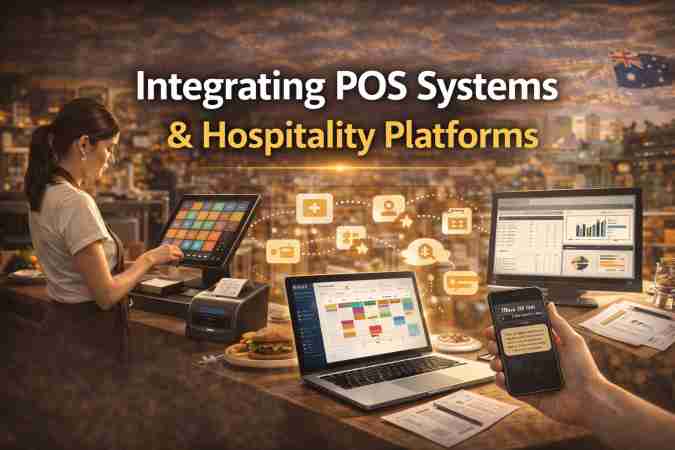
POS systems are the heartbeat of modern hospitality operations. They handle orders, payments, and daily transactions. But without proper integration into your broader business setup, POS systems often operate in isolation.
For hospitality entrepreneurs in 2026, aligning your POS system with people, planning, and growth tools is essential for scaling smart — not just running shifts.
This guide explains how POS integration fits into a wider hospitality platform strategy and why relying on POS systems alone limits long-term growth.
A Point of Sale (POS) system manages orders and payments. When integrated properly into your business ecosystem, it can also support:
Sales analytics and forecasting
Staff scheduling insights
Menu engineering based on popularity and margins
Customer data and repeat-visit trends
Inventory visibility and supplier planning
POS integration is not about adding complexity. It’s about turning raw transaction data into usable business insight.
For new and expanding hospitality businesses, disconnected systems create blind spots.
When your POS data connects with people and planning tools, you gain:
Faster onboarding and training for new staff
More accurate performance tracking
Clear insight when testing new menus, pricing, or service hours
Reliable data for planning growth or reporting to stakeholders
POS integration allows founders to move from reactive decisions to informed strategy.
To get full value from your POS system, it should align with:
Booking and reservation systems
Staff scheduling and workforce planning tools
Customer relationship data and loyalty insights
Inventory tracking and supplier ordering
Financial reporting and tax preparation
POS systems handle what happened.
Platforms help you decide what to do next.
| Tool Type | POS & Payments | Staff Coordination | Startup Support | Growth & Investment |
|---|---|---|---|---|
| POS Systems | Yes | Limited | No | No |
| Enterprise Tools | Yes | Partial | No | No |
| Hospitality Platforms | Limited | Yes | Yes | Yes |
POS tools are essential — but they are operational tools, not growth platforms.
This is where Venture Uplift complements your setup. It doesn’t replace POS systems. It supports the people, planning, and growth side of the business that POS tools don’t cover.
A new café uses:
Square for payments
ResDiary for bookings
Operations run smoothly, but challenges remain:
Hiring skilled baristas
Structuring rosters and pay rates
Testing new product ideas
Finding partners or growth support
This is the gap between running a venue and building a business. POS systems handle transactions. Platforms support decisions, connections, and growth planning.
Why is POS integration important in hospitality?
POS integration improves visibility across sales, staffing, and performance, helping owners make faster and more accurate decisions.
Does Venture Uplift replace POS systems?
No. Venture Uplift complements POS systems by supporting startup growth, hiring strategy, collaboration, and long-term planning — areas POS tools don’t address.
If you’re serious about growing a hospitality business — not just managing daily sales — POS systems are only one piece of the puzzle.
The next step is choosing a platform that supports the entire founder journey, from idea to growth.